Rural Crime
Half of rural business owners say that crime directly impacts their lives
If you live or work in the countryside, you’ll be aware of the distinct challenges facing rural areas compared to towns and cities.
What is rural crime?
To help better understand these issues and mitigate the impacts of rural crime for you and your business, explore our variety of resources below, including key focuses on:
- Fly-tipping
- Hare coursing and poaching
- Livestock worrying and trespassing
- Theft of machinery and equipment
- Heritage crime
If you are a CLA member, you have exclusive access to our full range of expert advice and guidance notes. If not, find out how you can join here.
Calling for government action
As a first point of call, governing bodies have a responsibility to address the significant impact that crime has on rural communities in England and Wales. The CLA has therefore shared its ‘mission’ to enable the the UK Government to tackle rural crime.
In the document below, part of our Rural Powerhouse campaign, we highlight the priority areas in need of an overhaul by the government so that rural areas can be better protected.
Many rural areas have no dedicated police officers, and for those that do, authorities can lack basis tools and resources to fight crime – some even lack torches, as discovered in a Freedom of Information request from the CLA.
Following our calls for a national rural crime strategy, the Home Office has pledged additional funding for countryside police forces, but as discussed in the short video below, there is still more to be done to support rural communities.
If you have any case studies or questions on rural crime, please reach out to a member of our rural crime team:
1. Fly-tipping
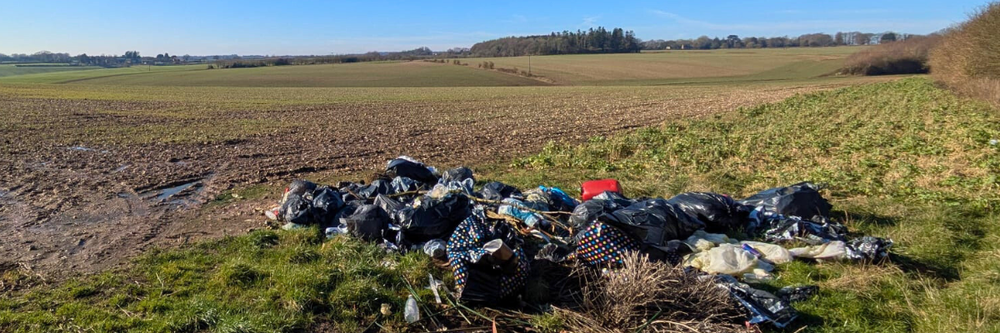
Each year, two-thirds of farmers and landowners become a victim of fly-tipping, with some targeted multiple times a month.
As well as being harmful to the environment, this crime can be extremely costly for victims and has prompted the CLA to devise a five-point action plan to combine the efforts of farmers, landowners, and rural communities with the government to eradicate this activity.
Each year, more than a million cases of fly-tipping are reported in England alone, and many more go unreported. Incidents in the English countryside increased by 6% in 2024, many of which happened on the land of CLA members. Read some of their testimonials here.
As the CLA continue to lobby on behalf of members, steps are being taken by the government to crackdown on waste criminals – including new plans to seize and crush caught vehicles. For more advice on how you can deter and report fly-tippers, explore the following links to:
- Report fly-tipping or illegal waste dumping on the government website
- Check that a waste carrier is registered on the Environment Agency's website
- Add your report to ClearWaste
- Watch this Environment Agency video on how to protect your land from waste criminals
2. Hare coursing and poaching
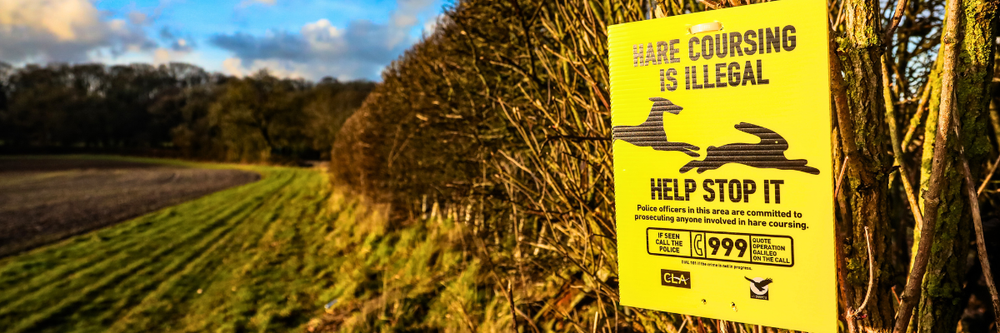
Hare coursing is the illegal pursuit of hares with dogs and was banned under the Hunting Act 2004. As well as negatively impacting wildlife and damaging property for landowners, in most instances hare coursing is linked to serious organised crime, generating huge sums of money for gangs that live stream the activity around the world.
The CLA has made great strides to help enforce hare coursing and urge all police and crime commissioners (PCCs) to continue funding the National Rural Crime Network so that research and reporting continues. Read our five-point action plan on this illegal activity below:
This crime, along with poaching, affects many farms. Find out more about this illegal activity by reading our guidance to:
3. Livestock worrying and trespassing

Livestock worrying can be a serious concern for landowners and their livestock. It can occur when countryside visitors miss poor signage or ignore the rules of the Countryside Code enabling dogs to harass farm animals such as sheep or cattle, causing stress, injury or even death.
The potential risks to animal welfare and farm productivity – especially during the lambing season – make livestock worrying a serious offence for landowners to be aware of, and as a result of greater policing powers, can lead to legal consequences for dog owners.
CLA members should explore our detailed guidance note below to find out how to report those who worry livestock and lawfully protect your animals.
How can you protect yourself and your land from access crime in the countryside? As well as ensuring you have the correct signage for rights of way around your land, make sure you’re up to speed on the other forms of access crime by reading our resources on:
- Dealing with fly-grazing horses
- Our top tips to avoid being a victim of equine crime
- Trespassing laws and the rights for UK landowners
- What to do when travellers and unauthorised encampments arrive on your land
- How to deal with Extinction Rebellion and mass trespass groups
For more details, learn more about reporting incidents of livestock worrying and equine theft at the Farm Watcher and Horsewatch websites.
4. Theft of machinery and equipment

As organised criminal gangs and groups become more prevalent, it’s vital to understand how you can stay safe in the countryside.
Read the CLA’s top tips on:
- What you can do to deter thieves
- How to report a rural crime before it escalates
- What to do if you see or use a drone
CLA members can also benefit from discounts to property security solutions, including:
- Selectamark Security Systems - for property marking, forensic coding and asset identification solutions that can help deter theft and aid recovery of stolen property
- Safe Site Security Solutions - member discounts are available on hiring a range of security products and services
To help protect what’s yours, there’s also security advice and products available on the CESAR , Secured by Design and Immobilise websites.
5. Heritage crime
With such a diverse range of heritage properties and culturally significant sites spread across England and Wales, it's vital that they are safeguarded from criminal activity and protected for future generations to enjoy.
Whether a stately home, church or other historic site, these valued properties can be vulnerable to organised crime which can cause loss or damage to heritage assets forever.
For tips on inexpensive but effective security measures to help protect your heritage property, read our detailed guidance note below:
For more advice, check out our guidance on reducing insurance costs for heritage assets here and learn about how authorities are cracking down on heritage crime in Wales here.
Visit the Heritage Watch website for more on reporting heritage crime.
Other helpful resources to protect your home and land from rural crime:
- Explore the possibilities of CLA Insurance and how it can benefit you - specially created for rural businesses and landowners
- Get advice from the Neighbourhood Watch
- Guidance on keeping safe from Crime Stoppers
- Find out if DISC can help reduce rural crime in your area
- Report crime accurately by using What 3 Words location finder
- Reach out to the Farming Community Network (FCN) for support
- The RABI charity is there to help farming families and communities