New PM 'must put rural Britain at the heart of reset'
Report backed by Labour MPs argues for renewed rural focus, as new polling shows public demand action
● New polling shows 63% of voters think Labour would be right to make rural communities and the rural economy a higher priority
● The Labour Rural Research Group (LRRG)’s new report, backed by the CLA, argues that unleashing the potential of rural Britain should be the key priority for the new Prime Minister
● CLA calls for immediate action to "grow the economy and create jobs in areas that often see high levels of deprivation".
A new report from the Labour Rural Research Group (LRRG), in partnership with the CLA, argues that Labour’s reset must include a new approach to rural Britain if the party is serious about delivering economic growth across the whole country.
Published as Labour reflects on its leadership, priorities and direction, The Future of the Rural Economy warns that rural communities are too often treated as peripheral to national economic policy, despite their central role in delivering food security, clean energy, housing, nature recovery and long-term growth.
New national polling commissioned by LRRG for the report finds that voters back a stronger Labour focus on rural Britain:
- Almost two-thirds of respondents said it would be the right decision for Labour to make rural communities and the rural economy a higher priority than in recent years.
- Support cuts across party lines. Prioritising rural Britain was backed by 71% of Labour voters, 70% of Conservative voters, 74% of Liberal Democrat voters and 66% of Reform voters.
- When asked about Labour’s rural policy offer under a potential Andy Burnham premiership, only 27% of respondents said they were confident the party would strengthen its offer.
'Chance to reset'
CLA President Gavin Lane said:
“The public are on the side of rural Britain, and they expect the next government to be too."
Taxes on family farms and businesses have left businesses reeling, but Andy Burnham has the chance to reset the relationship and work to unlock the enormous potential of the economy in rural areas
“There is no more time to waste on endless consultations and talking-shop committees. This report is a ready-made plan full of meaningful ideas. Adopting these policies, which are backed by Labour’s own MPs, will grow the economy and create jobs in areas that often see high levels of deprivation.”
James Naish MP, Vice-Chair of the Labour Rural Research Group, and lead author of the report said:
“As this new report sets out, rural communities shouldn’t be seen as peripheral to national renewal – they are places where growth can be generated, productivity unlocked and national priorities delivered, from food security, nature restoration and flood mitigation to new housing and energy generation."
Jenny Riddell-Carpenter MP, and Chair of the Labour Rural Research Group, said:
“Our polling shows that with a strong vision for rural Britain, Andy Burnham can make the case that rural Britain will be better off under a Labour Government.
“Nearly a third feel confident that he will be a strong leader on rural affairs, and a third are undecided. There is a clear opportunity to reset how Whitehall thinks about rural Britain."
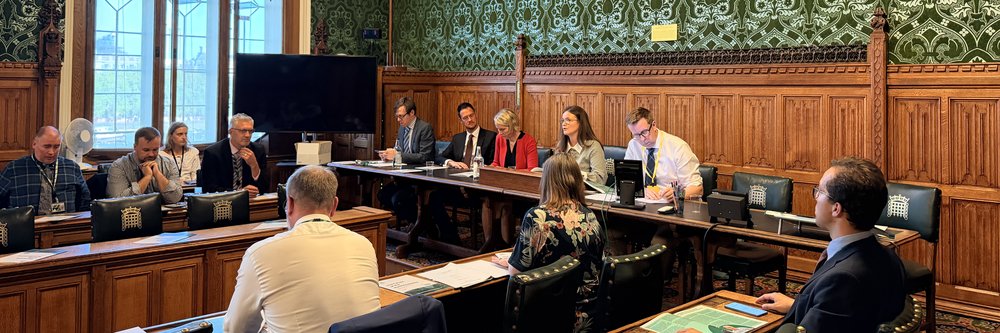
What does the report say?
The report itself finds that rural Britain remains economically significant, supporting millions of jobs, hundreds of thousands of businesses and major national supply chains. But it is too often treated as peripheral to national economic policy, rather than as a strategic part of the UK’s growth story.
Drawing on official statistics, written evidence from businesses, local authorities, academics, charities, sector bodies and community organisations, and focus groups with rural residents, The Future of the Rural Economy concludes that rural Britain is not economically weak, but economically constrained.
Rural England generated £259 billion in Gross Value Added in 2023, but its share of national output has fallen from around 19% in 2001 to approximately 12% today. Official Government data cited in the report shows that productivity in majority rural local authorities is around 92% of the England average, indicating an 8% productivity gap. Closing this gap could generate an estimated £22.5 billion in additional economic output.
The report cites the cumulative impact of structural barriers including weaker infrastructure, poor transport links, housing shortages, labour market pressures, planning delays, limited access to finance and unequal access to public services.
Therefore, the report sets out a series of recommendations to unlock rural economic growth, including a whole-of-Government rural economic strategy, stronger rural proofing across economic policy, targeted investment in infrastructure and housing, support for rural business scaling, a rural workforce strategy, and clearer approaches to land use, food security and environmental markets.