CLA secures wins for land managers as government publishes revised National Planning Policy Framework
Several long-standing CLA recommendations have been reflected in the revised NPPF, delivering a more proportionate approach to planning and rural development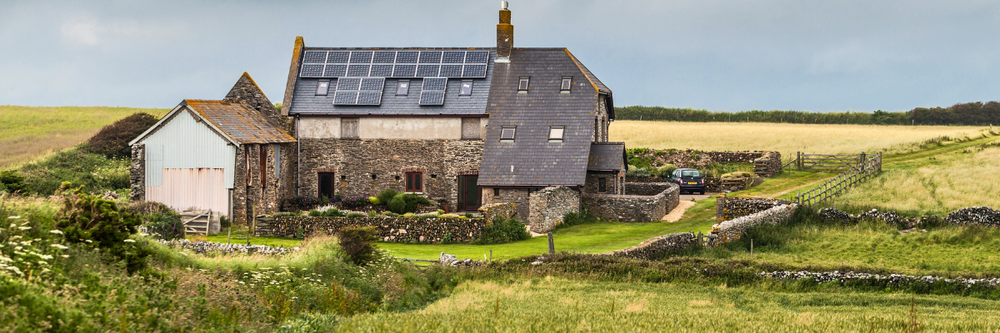
On Monday 17 August, the government published its response to the consultation on proposed reforms to the National Planning Policy Framework (NPPF), alongside a fully revised version of the framework. The reforms represent the most significant overhaul of the NPPF since it was introduced in 2012.
Earlier this year, the CLA submitted a detailed response to the Ministry for Housing and Local Government (MHCLG) consultation on the proposed changes, drawing on evidence from CLA members, branch committees, the CLA Rural Planners Forum and wider stakeholders – including the Royal Town Planning Institute (RTPI), Confederation of British Industry (CBI) and Rural Housing Network.
The new NPPF officially introduces National Decision Making Policies (NDMPs) into the English planning system. These new policies have equal weight to the planning policies for a local area and will replace them where there is duplication. This will ensure that the planning system is more consistent and for many CLA members, this is a welcome change.
The final document demonstrates that CLA engagement has delivered tangible results. For example, the NPPF specifically refers and provides more support to the types of development that CLA members undertake such as rural affordable housing, agricultural development, farm diversification and leisure and tourism.
Sustainable development and outside of settlements
For development in rural areas, new NDMPs state that development should be assessed depending on where it is located. New policies specify what is acceptable within or outside settlement boundaries. This ensures that proposals within the rural area are not assessed using urban-specific policies and vice versa.
The new policy for development outside settlements specifically supports:
- Development for agriculture, horticulture and forestry, outdoor sport and recreation, allotments, cemeteries and burial grounds, mineral extraction and processing, nature conservation
- Development for rural businesses and services including tourism
- The reuse, extension or alteration of an existing building
- Limited infilling between houses
- Rural Exception Sites
This list is not exhaustive, for a full list please review the NPPF (Policy S5).
A stronger recognition of rural business development
One of the most positive outcomes for CLA members is the strengthening of support for rural economic development. The new NPPF specifically recognises development associated with agriculture, horticulture, forestry and rural businesses with things like livestock accommodation, on-farm reservoirs, farm shops and accommodation for seasonal workers specifically referenced. The NPPF is now clear in stating that planning applications for these types of development ‘should be supported’.
The CLA has been successful in amending a wider new policy on long-term economic growth which now acknowledges the economic needs of rural areas, specifically recognising rural land-based and agricultural businesses as industries that will be of a particular importance for an area. This means that when preparing local planning policies, authorities must ensure that the economic vision and strategy for an area identifies the needs of the rural economy and enables the expansion or modernisation of rural businesses. Not only do we now have national decision-making policies supporting development for agriculture, but we will also have local planning policies that recognise the importance of these businesses for an area.
The CLA continues to lobby for improved training of planning officers on rural issues and agricultural matters. We are exploring how we can work collectively with the Royal Town Planning Institute (RTPI) on this.
Whilst the stronger planning policy recognition of on-farm reservoirs is welcome, to enable this vital development in a short time scale the government must include it as a permitted development right. We are pleased to see that following a meeting with both MHCLG and Defra, the government is committed to supporting farmers and will be updating its guidance on permitted development rights for on-farm reservoirs next month. The CLA policy team are also preparing sufficient evidence to demonstrate the clear need for improvements to legislation for reservoirs and we urge members to respond to our current survey here.
Progress on rural affordable housing
As expected, the revised framework strengthens support for Rural Exception Sites (RESs). This is in line with the government's agenda to increase the supply of affordable housing. First Homes Exception Sites have been removed, which will reduce competition for rural exception sites.
The definition of Designated Rural Areas (DRA) has been expanded as consulted earlier this year. This change will extend the coverage of DRAs to 91% of all parishes and unparished areas with a population of 3,000 or fewer. This, combined with another change, will allow affordable housing contributions to be sought on minor developments (fewer than 10 dwellings) in these areas. This should increase the supply of rural affordable housing and reduce the need for RESs.
The changes align closely with longstanding CLA policy objectives and should help increase the delivery of affordable rural housing. However, we continue to lobby for a RES Planning Passport which would see a bespoke Permission in Principle route de-risking the process and unlocking many opportunities for development. In the NPPF consultation response, the government has committed to exploring the use of Permission in Principle for rural affordable housing further which provides CLA with further opportunities for influence.
Planning applications made easier for medium-sized sites
The UK Government has also introduced a new medium planning category for developments of between 10 and 49 homes (sites up to 2.5ha).
This new sized site category will not only support SME builders but also CLA members with development ambitions. The government has decided to not take forward a proposal to give applicants discretion to discharge social and affordable housing requirements using cash payments in lieu of onsite provision. The CLA was only supportive of this proposal if it was subject to a prescribed hierarchy of spending to ensure that any cash sums collected from development in a rural area were spent in that area.
Another positive new addition within the NPPF is Policy DM2 which states that additional information should only be required for planning applications where there is clearly a policy that requires specific further information. The CLA and other stakeholders have been lobbying to ease the financial burden of the planning system, and this will be significant. Member case studies and planning survey results have contributed to this win as we know that in 2024, 72% of members had abandoned plans to invest in their business due to problems with the planning system. 70% of those that had abandoned plans spent between £5,000 and £50,000 on projects.
The new policy will improve the viability of some developments as it means that additional information requirements at a local level should not be applied to all planning applications. Coupled with the new medium-sized site for development, this will be a welcome change for many and reduce the extensive cost of preparing a planning application.
The default yes around railway stations
The government has also confirmed plans to introduce a presumption in favour of development around railway stations, including those within the green belt. The policy is applicable to stations located within settlements or stations outside settlements that are deemed ‘well connected’.
The CLA has successfully highlighted concerns that the proposed definition of a well-connected station risked excluding many rural communities and the government has amended this definition and brought more stations within sustainable rural locations into scope.
The definition of a ‘well-connected’ station has increased from the top 60 Travel to Work Areas (TTWAs) to the top 80, using more up-to-date data. The CLA will continue to emphasise that the focus for development in rural areas should not solely be on sites adjacent to railway stations; there are sustainable sites elsewhere that must still be considered.
In addition, the previous proposal was for a minimum density of 50 dwellings per hectare to be applied to developments adjacent to well-connected stations. The CLA pointed out that development at this level would result in schemes that are at odds with the character of the rural area. We support a small number of homes in a large number of villages and despite support for the ‘default yes’ for development adjacent to stations, could not support such high densities. The government has scaled back on this proposal and has changed the density requirements around stations with lower service levels. For well connected stations the density levels are now proposed as: 35 dwellings per hectare for ‘well-connected’ stations with a service frequency of 4+ trains per hour and 45 dwellings per hectare for ‘well-connected’ stations with a service frequency of 8+ trains per hour.
Negative outcome for heritage
The previous NPPF, in general, protected heritage well. The new NPPF in contrast, despite a major CLA and heritage sector campaign, fundamentally weakens heritage protection by removing the crucial acknowledgment, at the core of all previous heritage policy, that heritage needs to be economically viable if it is to survive. The government has still not explained this change, which will make consents more difficult to obtain, and put heritage at increased risk, leaving a legacy of decaying buildings across England.
Statutory consultees and the planning system
Alongside the publication of the new NPPF, the government has also published a response to an earlier consultation on how some statutory consultees engage with the planning system. The CLA responded to this consultation in support of proposals to slim down the referral process. The Gardens Trust and Theatres Trust will no longer be Statutory Consultees for planning applications. Natural England, Historic England and the Environment Agency will no longer be required to consult on lower-risk or routine applications where issues can be addressed through standing advice, planning policy or local expertise.
These reforms are aimed at improving performance alongside the introduction of a performance framework for new statutory consultee and potential funding support through planning fee reforms later this year.
What does this mean for rural land managers and CLA members?
Overall, the revised NPPF marks a significant step towards a more supportive planning framework for rural businesses, farms and landowners. The inclusion of specific references to agricultural development, diversification and rural housing demonstrates that the government has listened to many of the issues raised by the CLA.
The CLA will continue to work with ministers and officials as the reforms are implemented to ensure rural communities fully benefit from the new planning policies.
If you are a CLA member and would like to understand more about how these changes may impact you, please use the free advice on planning (and many other topics) as part of your membership. You can get in touch with your regional office for advice and we would be happy to help.
