How is dry period affecting farmers?
Farmers speak of financial and emotional impact of drought, and discuss their fears for winter
Many farmers across the country have suffered this year with extreme drought conditions, and the Environment Agency has warned these conditions will continue into autumn, despite bursts of heavy rain in recent weeks.
Five areas of England remain officially in drought, and, for many farmers, the damage is already done, with fears for the winter ahead, followed by another possible dry spring.
For Nutfield Dairy farmer Matt Elphick, who farms at Brays Farm, owned by CLA members the Countryside Regeneration Trust in Nutfield, Surrey, the year has been financially and emotionally draining.
He said: “It's definitely the hardest year I have ever had.”
Silage and straw are in short supply, and prices have doubled compared to last year. Matt has just 25 to 30 bales left, barely enough for a month’s feed, when he would normally have stores to see him through the winter.
“I am worried I won’t find enough feed and it might be we have to travel a long way to get it, which costs more,” he says. “At some points in the summer, the cows were pretty much on a winter ration. Milk yields have held up because we’ve been feeding the cattle, but the cost is huge. It’s going to be a £6,000 to £7,000 bill to get yet more silage and straw, and that wasn’t in the budget.”
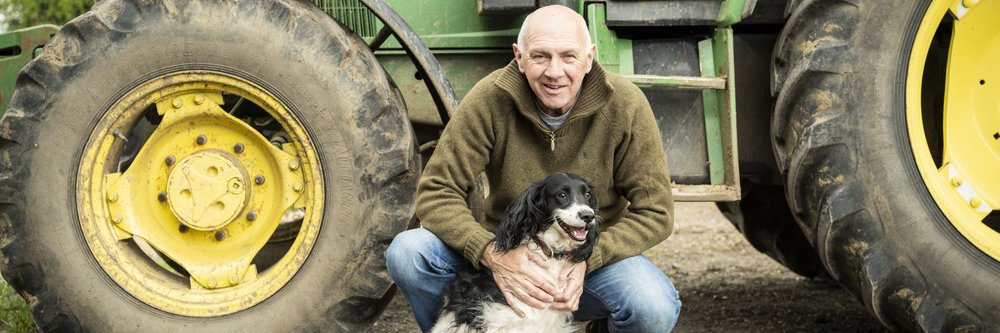
“I literally cannot have another bad year,” says arable farmer Tim Scott, of Lark Rise Farm, Cambridgeshire, who has also felt the squeeze. The 400-acre farm is owned by the CRT and has been given a Redlist Revival Award for 'Highest Density of Grey Partridge’.
Tim said his spring crops were down 70 per cent, winter crops down 30 per cent, leaving him with what he describes as “record low yields.”
“This year, the yield could barely justify combining the field. Usually, if you have a bad year, the price will rise because of shortages, but this year prices are still falling. The grim reality is I’ve had the lowest yield in decades, and the grain is selling for the same price as 30 years ago,” he said.
He said the “perfect storm” of weather patterns with a dry spring, scorching sun, then cloud, just as crops should have been producing more grain, followed by rain, has left farmers questioning their future.
“There are no two ways about it, a lot of farmers are really considering if it’s worth carrying on. I literally cannot have another bad year. Farmers want to farm and until my body says enough is enough, I want to carry on but it is very difficult for farmers, especially for tenant farmers who cannot sell.”
To mitigate the weather, Tim is moving away from spring-sown crops in favour of more resilient winter sowing, despite the higher costs.
'Hard summer'
Instead of buying in extra winter feed, Jim Strawbridge, at Babers Farm in Dorset, has decided to reduce cattle numbers to make winter more manageable and sell lambs as stores rather than finishing them.
“For the winter, we will reduce the cattle numbers and see what happens in the spring,” he said. "With every farmer buying in food, it is so expensive so we will cut back on the cattle and hopefully in spring we will go again. Everyone is buying wrapped silage that’s been there for two or three years.
“It’s been a hard summer but we’re still here. It’s been a really bad year for the amount of crops. We have been mowing 8-acre areas to get 200 bales from them when it would be 500. It's 70 per cent down on crops. We have been feeding last year’s hay.”

For Kayleigh Robb at the CRT’s 200-acre heathland working regenerative dairy farm Pierrepont Farm in Frensham, Surrey, she is worried it will be a “dicey winter buying in quality feed".
“The weather this year has massively impacted the farm,” she said. “I’m going to have to buy in all my winter cattle feed, which is going to be an expense that wasn’t in the budget with prices creeping up and up as we head into winter. The plan was to do a second cut, or third cut, but due to the sandy soils, it just didn’t grow.”
Her sandy soils at Pierrepont meant grass burned off quickly in the summer heat, leaving Kayleigh in a use it or loose it position.
“We had no grass all summer, and what little we had, I left for standing hay for the dry cows, which worked really well and saved me having to buy in hay. It’s a game of nerves, and thinking outside the box,” she said.
Kayleigh said she was able to keep the cattle cool in the heatwave as many of the fields are sheltered due to having big oak trees and when the weather hit 25 degrees Celsius and above, even up to 36 degrees Celsius, she opened the sheds to allow them access to the sprinklers.
“This does make the summer more labour intensive, having to shift the cows around more frequently and planning ahead to make sure the fields with the best shelter also have feed and plenty of water in them for the cattle and sheep,” she said.
Looking ahead, Kayleigh plans to introduce more drought resilient herbal leys and legumes next spring, supported by the Sustainable Farming Incentive (SFI), to improve resilience against future dry spells.
“A large percentage of people are in the same boat this winter in the south and will struggle to get hold of good quality winter feed and straw, with prices being higher than I’ve ever seen them. It’s making sure I have a plan in place for winter feeding so it doesn’t impact milk quality and fertility. It’s going to be a dicey winter.”