Understanding ELM schemes: where does SFI fit?
The first of our four-part series explaining Environmental Land Management schemes, the Sustainable Farming Incentive and the practical steps for land managers. In this blog, we dive into the context and framing of the schemes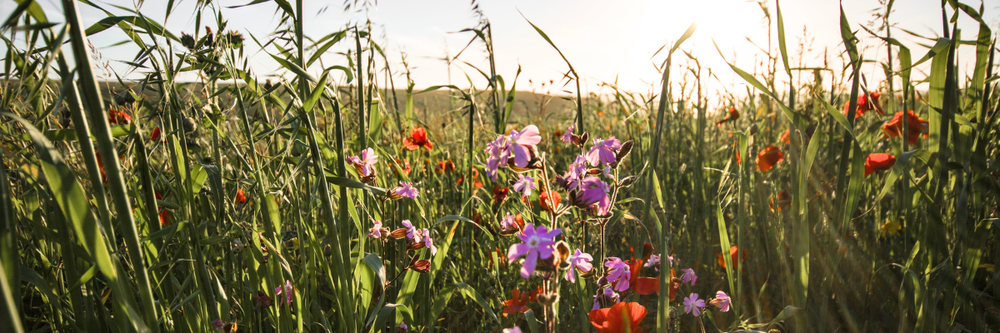
What are Environmental Land Management schemes (ELMs)?
The Agriculture Act 2020 set out the direction of funding for agriculture following the UK’s departure from the EU. Alongside a phasing out period of the Basic Payment Scheme (BPS), the act empowers the Secretary of State to give financial assistance for several environmental, sustainable or productive agricultural purposes. This led to the development of the ELMs.
Currently, ELMs are delivered through three main schemes, the Sustainable Farming Incentive (SFI), Countryside Stewardship Higher Tier (CSHT), and the Landscape Recovery (LR) scheme.
Some elements of the ELMs are designed to be relatively accessible and suitable for individual businesses, including smaller holdings, whereas others are longer-term or more complex and may be more relevant to larger areas or collaborative projects. While participation is voluntary, farmers and land managers are key to delivering many of the government environmental targets set within the Environment Improvement Plan 2025. Defra hopes to bring in more farmers and land managers into ELMs who may not have taken up the schemes previously.
What guidance is there to help apply for SFI?
The SFI scheme is scheduled to open from June 2026, in two separate windows. At this time, the first June window will be only for farms under 50 hectares and farms without a live ELM scheme, and the second window in September will be open for any applicant. Ahead of the first window in June 2026, the CLA is publishing a four-part series of articles, helping members to develop and refine their understanding of the SFI scheme and application process. Over the coming weeks we will cover:
- Week one – the context and framing of SFI
- Week two – practical readiness and Rural Payments Agency (RPA) requirements
- Week three – what the SFI offers and how to interpret the scheme information
- Week four – how the scheme works in practice, key rules and other delivery matters including enforcement procedures
The series is aimed particularly at CLA members and land managers who may have limited experience of agri-environment schemes, manage smaller areas of land, or have not previously engaged with ELMs or SFI. However, even for those with experience in SFI applications, the advice provided will be beneficial and constructive to all.
This guidance is intended to provide clear, straightforward background information to support informed discussion – rather than to promote participation in any particular scheme
These articles will lead up to a CLA webinar on ELM schemes (not just SFI) in early June, of which further details will be released in due course. We will also be providing key links for members throughout the series at the bottom of each article.
This first blog focuses on setting the scene. It explains in simple terms what ELM schemes are, why they have been introduced and where SFI fits within the wider framework.
Where does SFI fit in ELMs?
The Sustainable Farming Incentive (SFI) is one part of the wider Environmental Land Management (ELM) framework. It focuses on practical land management actions which benefit the environment and can often be integrated into existing farming or land management activities.
Under SFI 2026, farmers and land managers have the opportunity to flexibly choose from a list of actions which can fit within their farming systems. Compared to CSHT and LR, the SFI can be seen as the most accessible option and is a suitable entry point for applicants looking to seek funding for certain actions through ELMs. SFI 2026 agreements last for three years and both landowners and tenants are able to apply for the scheme (subject to certain conditions being fulfilled). We are waiting for the final scheme guidance for SFI 2026, but in the past, this has included the applicant having management control of the land for the full period of the scheme.
Crucially, SFI may not be the right fit for every holding, and choosing not to participate can be a reasonable decision.
What do the other ELMs offer?
Alongside SFI, ELMs funding is also delivered through either Countryside Stewardship Higher Tier (CSHT) or Landscape Recovery (LR). Broadly speaking, these sit further along a spectrum of ambition, complexity and environmental targeting. In contrast to SFI, CSHT and LR are intended to support more tailored and strategically targeted environmental outcomes.
As a general principle, CSHT focuses on site‑specific management for priority habitats, species, historic environment features and water quality outcomes. Key differences compared to SFI include:
- eligibility is currently limited to certain priority groups: those with CSHT agreements that expired in 2025, and those with an approved woodland management or agri-environment plan
- mandatory advice and formal application processes, whereby applicants must be invited to apply
- longer agreements and higher management intensity
CSHT may be more suitable than SFI where land contains high‑value habitats such as species‑rich grassland, wetlands or moorland, or where there are specific conservation objectives that cannot be met through standard SFI actions alone. However, given its complexity, evidence requirements and tighter parameters, it is often better aligned with targeted or specialist participation than as a first step for farmers seeking a whole‑farm entry point.
Landscape Recovery represents the most complex and least prescriptive ELM offer. It is focused on long‑term, large‑scale land use change to deliver specific outcomes such as habitat restoration, river catchment recovery or nature‑based climate mitigation. The first two rounds of funding have brought in over 50 projects, which have each had development funding of up to £500,000. Most schemes are led by experienced facilitators. Compared to SFI and CSHT, LR:
- operates at landscape scale, often involving multiple land managers
- is project‑based rather than action‑based
- requires detailed proposals, partnership working and long lead‑in times
- offers funding for planning, capital works and long‑term delivery
LR may be chosen over SFI where land managers wish to pursue transformative change that goes beyond adjustments to existing farming practice. While it can deliver highly targeted and significant environmental outcomes, it demands high levels of coordination, governance and commitment, and is therefore suitable for a relatively small number of participants.
Overall, SFI prioritises accessibility and scale of uptake, while CSHT and LR trade simplicity for greater environmental precision and impact.
What practical SFI and ELMs tips are available?
Over the coming weeks, our advice blogs will look at the practical steps involved if a landowner wishes to engage with SFI, what SFI offers in terms of actions and payments and how agreements work in reality.
Later this month, members will have the opportunity to ask specific questions in our free June webinar which will look at ELM schemes more broadly. Please contact jack.chivers@cla.org.uk or any CLA regional adviser for more information.
Useful links:
The Agriculture Act 2020: read the full details of the act
The Environment Improvement Plan 2025: learn about the ambitious roadmap for nature, launched by the UK Government
SFI 2026 latest development: a Defra blog on the details, definitions and what to expect from SFI26