Government has made England's wildfires risk worse - ministers must change course before it's too late
As wildfire risks grow each year, learn how restrictive burning rules are making prevention harder for farmers and land managers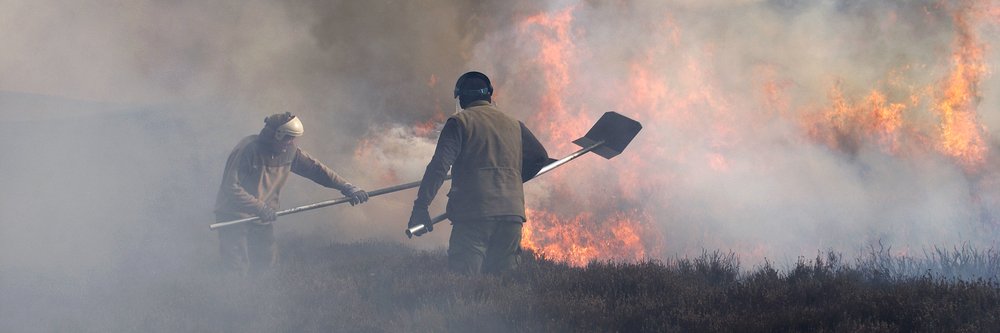
Anyone who has seen the news out of Greater Manchester, Derbyshire, the Cairngorms, Bordeaux or Madrid this summer will know the ongoing wildfires aren’t a one off. They're a pattern, and a warning.
Hotter, drier summers create the risk for bigger and more frequent wildfires, particularly when fuel loads aren't managed. CLA members have pointed this out for years – that unchecked fuel loads are endangering rural communities, public health, wildlife and the carbon locked up in our peatlands.
A problem that could have been avoided
Given that 2025 was the UK’s worst year for wildfires on record, it would be reasonable to expect that we might have learnt lessons and be better prepared for this year’s fires. Instead, we are worse prepared. Defra made it much more difficult for land managers in England to conduct controlled burning over the winter. Controlled burning, also known as prescribed burning, is the planned process of setting fire to small area of moorland to remove the older, woodier vegetation that fuels wildfires.
Last September, Defra extended the licencing regime for controlled burning to cover all upland peat deeper than 30cm, an area of nearly 700,000 hectares, three times the previously licenced area. Defra treats controlled burning as a last resort, to be permitted only in exceptional circumstances that are almost impossible to satisfy. It's what Defra's own press release called it: a de facto ban on the most effective wildfire prevention method across the highest-risk upland land.
Defra will point out that its regulations still allow burning to manage wildfire impacts, but look closely at the wording and the problem becomes clear. The September 2025 regulations shifted the allowable grounds for a licence from managing the ‘risk’ of wildfire to managing its ‘impact’. That is the difference between stopping a fire from spreading once it has already started, and preventing it from starting in the first place.
This subtle change in language reflects a dysfunctional split in wildfire responsibilities across England’s government. Defra’s legal mandate is to clear up after wildfires happen, and to restore the health of habitats that may be wildfire-prone, such as by rewetting them – even if they might still burn to dust next year. The Ministry of Housing, Communities, and Local Government has the mandate to prevent and tackle wildfires, but it does not seem to have recognised the problems with Defra’s licencing.
‘Dangerous policy choices’
Other changes in the 2025 regulations put more peatland at risk. Previously, a licence could be granted to manage vegetation on land too steep or inaccessible for mechanical cutting. This ground has been removed, leaving few legal ways to prevent wildfires on exactly the terrain where fuel loads are hardest to control by other means. Before, licences were only needed on peat deeper than 40 cm. This is now 30 cm, sweeping a larger area into licencing even though peat depth has no bearing on whether controlled burning is a suitable tool. When conducted well, controlled burning only heats the peat to the temperature of a lukewarm cup of tea – not enough to cause damage.
Worse, many applicants with designated peatland can't even get as far as an application for a Defra licence because this requires Natural England’s prior consent. Natural England sees controlled burning as an automatic reason for unfavourable conservation status of blanket bog, and so refuses consents to burn.
These dangerous policy choices rest on the assumption that rewetting peatlands and restoring their ‘natural’ hydrology is sufficient to restore peatland health. Yet, our upland peatlands will not revert to some untouched wetland state even if all drainage channels were blocked (and a large number have been). Some areas are naturally drier, water tables drop seasonally and climate change may soon make fully saturated rain-fed bog a habitat of the past. Rewetting increases overall resilience, but doesn’t replace the need for selective controlled burning.
Making land managers part of the solution
Up and down the country, farmers, gamekeepers, and land managers are already doing the work fire services can't do alone. They cut fire breaks, watch the weather, patrol for careless recreationists, move water bowsers into place and get to fires fast when they start. Controlled burning is how they make it less likely they will need to take emergency steps.
The people doing this work know their ground. They know where the risk is building and where a dry spell could turn a manageable problem into a major incident. Regulation should respect that knowledge and the scientific evidence that backs it up, not be based on assumptions that rewetting is the solution.
So, we've told government directly. The CLA has written to the new Secretary of State, Angela Eagle, setting out the case for urgent action on wildfire risk. We've been speaking to Natural England too as its consenting system is a major blocker. Our position is straightforward: the 2025 amendment regulations should be rescinded. Short of that, Defra must overhaul a licensing system that is bureaucratic, expensive to navigate and demands that applicants disclose information with no clear bearing on wildfire risk.
Wildfires don't wait for licences to be processed. If this goes unaddressed, fuel loads will only build in size and the risk will only worsen to the people, wildlife, rural livelihoods and the carbon we're trying to protect.
Land managers aren't asking for much. They just want government to notice their work on the ground helping to prevent these fires, and to stop making their job harder while they do it.