Defra’s Farming Roadmap 2050: what farmers need to know now and for the future
The government’s long-term plan for farming in England focuses on profitability, funding, regulation and resilience – but what could it mean for your rural business?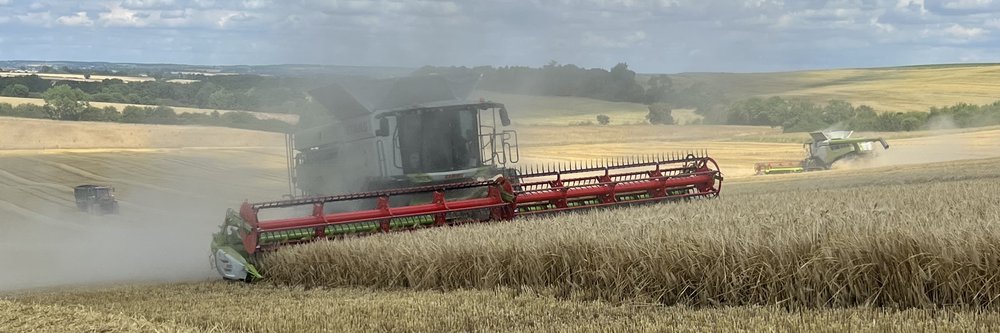
The long-awaited publication of Defra’s ‘Farming Roadmap 2050: Growing England’s Future’ is a significant step in setting out government’s long-term vision for agriculture. However, delivering on its ambition of a profitable and resilient sector will require turning broad principles and ambition into effective, workable policy.
As CLA President Gavin Lane says, "the ambition of Defra's long-term Farming Roadmap is welcome, but for many farmers the immediate challenge is staying profitable.
Farmers need a stable policy environment, greater clarity on farming schemes, meaningful planning reform and a more joined-up approach to rural affairs across government
But how exactly will farmers and land managers be affected by the government’s plans?
Our analysis of the Farming Roadmap below sets out the practical details that will affect CLA members in both the short (by 2030) and long-term (by 2050) and point to areas where more work is needed.
In a nutshell: the Farming Roadmap
Overall, the Farming Roadmap is a welcome contribution that sets out how farming and food production will fit among the myriads of strategies, plans and policies from the government (e.g. Environmental Improvement Plan, Land Use Framework, Food Strategy). It recognises that farming and food production needs cross-departmental working, particularly around planning, education, and trade (although it is silent on the tax regime). It’s also clear about the changing role of Defra towards being a stronger regulatory body, and the focus of funding public goods only where the private markets cannot do so.
The Farming Roadmap touches on responsibilities of farming businesses and the pre- and post-farmgate supply chains.
Key points from CLA analysis
- There is recognition that production of crops and livestock remains the core purpose of farming
- Shift to low input farming – nature friendly farming, regenerative and agroecological practices
- The intent for farming to be profitable, sustainable, productive and resilient
- The importance of the sector growth plans that will be overseen by the Farming and Food Partnership Board
- Focus on transitioning to ‘nature friendly farming’ practices
- Greater targeting of likely declining public funding focussing on areas that will not be covered by the private sector
- Increasing regulation and enforcement
- Clarity on the funding streams and timelines to 2030
The Farming Roadmap does not create new targets. What it does is set out a vision for 2050 and bring the “farming relevant parts of the government’s statutory commitments on climate and nature…alongside plans for food security, land use and farmed animal health and welfare”.
Defra has created a flowchart within the Farming Roadmap which illustrates the overall intended delivery of farming in a changing environment.
How does the Farming Roadmap characterise farming in 2050?
So, what is the overall direction of travel?
The four key strengths which the government sees as typifying farming in 2050 are profitability, sustainability, productivity, and resilience. The multifunctional landscape will support productive farming, nature recovery and climate resilience in harmony.
The UK Government does not expect this change to happen for all farms at the same time, but, rather, all farms will have credible routes to improving their profitability, where effective use is made of available opportunities.
One of the defining sentences of the Farming Roadmap is that, by 2050: Public funding, private investment and regulation will work together as a coherent and well understood whole, enabling consistent delivery of outcomes at scale.
The 2050 vision goes beyond this current parliament, and both domestic and global politics can change. However, what we can expect to see past 2030, is a restructuring of the role of public funding, focussing it on actions that would not be supported by the private sector. This will be accompanied by (i) developing and expanding the private market investment into English agriculture and (ii) increasing outcome-focused regulation on agriculture.
We can also expect funding to become increasingly targeted to priority zones, which was suggested previously in the Land Use Framework. The Farming Roadmap outlines spatially targeted payments for the Sustainable Farming Incentive (SFI) and Countryside Stewardship Higher Tier (CSHT), and spatial prioritisation for Landscape Recovery (LR).
Past this, we can only speculate on what other changes will be made. Importantly, to some degree, there needs to be some adaptability built into the Farming Roadmap which tends itself towards a changing environment and climactic conditions.
In the short-term, what practical and immediate steps can we expect to see up to 2030?
The second section of the Farming Roadmap looks at more immediately actionable plans, outlining what the government considers as necessary actions before 2030. There are three interconnected themes:
- Profitable and productive. Supporting farm business performance
- Sustainable. Farming for the environment and sector sustainably
- Resilient. Building a resilient farm business
Within each theme, the Farming Roadmap sets out specific actions that the government will be undertaking in each area. It contains a timeline of key dates and activities to 2030, including repeated Environment Improvement Plan (EIP) targets and allocated investments within this time (such as a total of £85m by 2030 for restoring, protecting or better managing peatlands).
The Farming and Food Partnerships Board, including Sector Growth Plans, are included in the Farming Roadmap as recommended in Baroness Batters’ Farming Profitability Review. These Sector Growth Plans, created by the industry and government together, will identify barriers to growth and solutions to create more profitable agricultural sectors. The board is currently considering both the horticulture and poultry sectors, to strengthen market opportunities, business resilience and encourage best practice in the sector.
There are several commitments throughout the guidelines. The Farming Roadmap 2050 will likely continue to be a key part of future Defra policy design and be something that the CLA will continue to refer back to for continued and expanding analysis.
What is covered within each roadmap theme?
Theme 1 – Profitable and productive
This theme is about strengthening the economic foundations of farming so businesses can invest with confidence, on the basis that food security depends on profitable, productive farms. The government frames its role as removing structural barriers, de-risking proven innovation, improving market fairness and supporting a capable workforce – while recognising that profitability relies on strong business fundamentals like financial management and decision-making.
On food and growth, the government has committed to maintaining domestic production and use land efficiently for high-value food, and other outputs. There is an intent to grow high-value, high-quality exports. Productivity growth is to be driven by innovation and technology.
The Farming Roadmap commits to extending the Farming Innovation Programme to 2030/31, continuing with ADOPT farmer-led trials, investing £15m in the Genetic Improvement Networks, accelerating agri-tech and robotics adoption, and driving innovation-friendly regulatory framework.
Enabling growth through planning reform features heavily. The roadmap touches on publishing the updated National Planning Policy Framework as a key way to support faster and clearer planning decisions. Additionally, it appears to be keen to speed up planning decisions to help farms diversify and build infrastructure.
On markets and trade, the headline proposals include the ongoing EU SPS agreement to cut friction (anticipated mid-2027), further trade deals, minister-led trade missions and helping farmers access the £5bn public-sector food market through better public procurement mechanisms.
Skills and workforce actions include working with the Department for Education to create new agricultural qualifications (Level 2 Occupational Certificates, Level 3 ‘V Levels’), expanding peer-to-peer learning through the Farmer Collaboration Fund, and continuing the Seasonal Worker route to 2030 (announced in February 2025).
There is also tailored support for upland farmers, including moorland actions in SFI 2026 and a community-led uplands project in Dartmoor and Cumbria – although the CLA would like to see more ambition for this sector. We recently submitted our response to the EFRA select committee call for evidence on England’s uplands.
Theme 2 – Sustainable
This theme addresses the pressure current farming systems place on soils, water, air, habitats and the climate. The response is a shift toward soil-focused, low-input practices. The Farming Roadmap sets out the direction of a more active regulatory system, and integrated, spatially targeted solutions that tackle pollution at source. This recurring principle outlines that some practices, currently paid for through the Environmental Land Management (ELM) schemes will, over time, be considered more as standard practice and move into regulation.
The government wants to raise some environmental regulatory standards while keeping rules simple and advice led. The Law Commission will review environmental law affecting farming, and the Farming Roadmap identifies modernising fertiliser regulation and reforming livestock traceability regulations as two areas, among others.
ELM schemes stay central, with the budget rising to £2bn a year by 2029 and more spatial targeting from 2030. Payments are split into three types: mitigation actions (phased out as regulation comes in), conversion actions (phased out as they become normal practice) and public-good actions (funded long-term).
Water is also focussed on, and the impact of agriculture on water pollution. There are legal targets to cut nitrogen, phosphorus and sediment by at least 40% by 2038 that were outlined in the Environment Act 2021 and plans to reform water industry planning to unlock more investment in nature-based and preventative solutions, and new design of policy solutions which consider multiple interventions simultaneously (i.e. water, air and soil). Biodiversity is delivered mainly through agri-environment schemes, working towards targets to halt species decline by 2030 and create 500,000 hectares of wildlife-rich habitat outside protected sites by 2042.
Theme 3 – Resilient
This theme is about helping farms cope with shocks like extreme weather, disease and volatile prices. The government's job is to give stable policy and reduce barriers to land, capital and labour. In return, farmers are expected to treat risk management, diversification and long-term planning as a normal part of running a business, supported by better data.
On climate, farming is set to become the UK's highest-emitting sector by 2050, and emissions may need to fall by around 45% (suggested by the UK Climate Change Committee’s seventh Carbon Budget advice). The government will start a national conversation on cutting emissions and has committed to publishing a Food and Farming Decarbonisation plan for England. This will set out a clear framework to support farmers in reducing emissions, protecting the environment and strengthening our long-term food security.
For adaptation, Defra is now taking advice from the Climate Change Committee and planning for at least 2°C of warming, with the fourth National Adaptation Programme due in 2028. There will also be better funding research to breed new resilient varieties of crops, as well as exploring novel crops.
Biosecurity is treated as a top priority, with plans to tackle exotic diseases, deliver a TB-free England by 2038, clamp down on illegal imports and invest over £1bn in the National Biosecurity Centre at Weybridge. The theme also relies on better data and systems, a coordinated research programme and a long-term plan to bring government services together into a single digital farming account with one agreement and one payment per farm.
What Farming Roadmap gaps are causing concern?
Although the roadmap is an ambitious strategy for England’s agricultural industry, the CLA has identified some key areas for further action:
Short-term policy delivery is key for many businesses who are facing declining profitability in a volatile operating environment. The Farming Roadmap must create confidence in (i) accessing the SFI, (ii) the continuity of previous agri-environment agreements, and (iii) a clear timeline for grants. Businesses must be allowed to make better and more considered, use of available funding.
Private sector funding for environmental delivery is an opportunity, but Defra must take positive action to create the funding flows. The planned ‘task and finish’ group for private funding for sustainable farming will be key to the next steps to build on the wide range of pilots from government and business already in existence.
The tax regime is not touched upon within the Farming Roadmap, and there must be stronger consideration of how this can be more supportive to rural businesses to encourage investment and drive growth.
Finally, there must be robustness and scrutiny around the commitments to 2030 and beyond. For example, on agricultural inspections, different documents appear to present figures in slightly different ways, which at face value can seem inconsistent. While there may be methodological reasons behind this, it underlines the importance of looking closely at how headline numbers are constructed. Transparency will continue to be imperative so that stakeholders can clearly understand what is being promised in practice.