Guest Blog: Taking the leap
Rural Adviser, Helen Dale speaks to member, Charlie Giffard about what landowners need to know about Biodiversity Net Gain Habitat Banks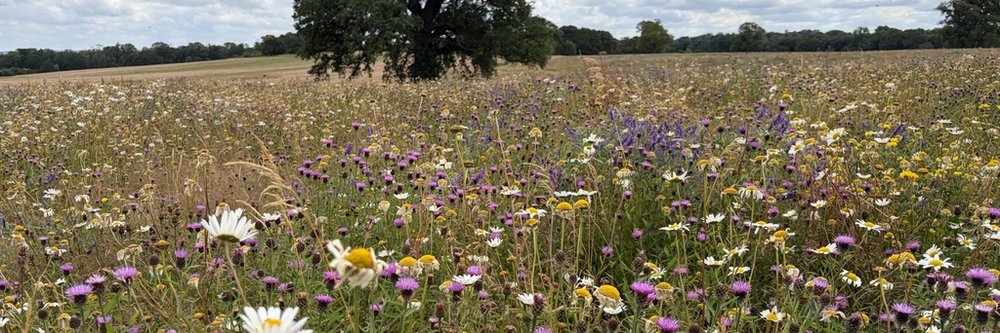
It’s never easy being an early adopter. It is time consuming, risky and difficult to find where to go to for advice and support.
However, this is the situation Charlie Giffard, owner of the Chillington Estate, found himself in 2023 when he decided to look at a Biodiversity Net Gain (BNG) habitat bank as an alternative, long-term income for part of the Estate.
We asked Charlie what made a BNG habitat a viable business decision for him and to share his experience, and any pitfalls he encountered along the way.
What made you decide to pursue BNG?
79 acres were taken back in hand by the Estate in early 2024. At the time Biodiversity Net Gain (BNG) was starting to get a fair amount of coverage in the press. It was also becoming apparent that, with ever tightening public funds available for agri-environment schemes, land managers would be well advised to look at all available options for funding, especially any opportunities for tapping into private markets.
How did you start the process?
As an early adopter of BNG it was hard to find a clear written process – no step-by-step instructions existed. Dad didn’t even have a clue what I was banging on about.
It is now easier to find advisers and brokers to manage the whole process and register your land as a habitat bank, but for us the initial contacts and negotiations were all made directly with various partners and agencies involved.
We got ourselves into a position to create the habitat bank with a solicitor, ecologist, seed merchant, farmer and responsible body and then set about creating it. Only then did we make our submission to Natural England. During creation it dawned on us that we would need to sell the units as they do not sell themselves so we started contacting buyers.
What were the main challenges?
EVERYTHING! We knew that if BNG was to work for us in the long-term, any habitat we created needed to be easy to achieve in the first instance and easy to maintain over the period of the 30-year agreement.
In 2024, we started preparing the ground and reseeding the 79 acres, which eventually equated to 211 biodiversity units, of species rich grassland. So far, we have sold 51 units, with a further 31 under negotiation.
There have been up-front costs. For example, the ecologist to carry out a Habitat Management and Monitoring Plan and the creation of the habitat (buying and sowing seed). There will obviously only be a return on this investment once the units are sold.
It’s a requirement of BNG that a Responsible Body is appointed to monitor the delivery of the BNG and the long-term success of the habitat creation. Initially we considered a S106 with the County Council, but the process was too slow for us. So, we ended up working with Staffordshire Wildlife Trust who were able to get things up and running much more quickly under a Conservation Covenant
What are the key considerations?
- The size of what you want to create. We have created 32 hectares of wildflower rich grassland which has provided 211 biodiversity units for trading.
- Who are you aiming to sell the units to – housing developers, warehouse developers, a utility company? You must create what they need.
- Always make sure you have chosen a Responsible Body who you are happy picking up the phone to. You can find a list of Responsible Bodies here.
- Check your Local Nature Recovery Strategy (LNRS). If your land is included on the map with the habitat you wish to create then there is a potentially 10% uplift on BNG value.
- What else can you do with the site? Two years on from reseeding, the meadows look spectacular and will link into our eco-tourism ambitions. We also have a wildflower resource which we may be able to sell as a seed source on other BNG sites.
What would be your key tip for other CLA members?
Pick a habitat which works for your business and consider the costs to maintain over the full 30 year agreement – you should account for potential additional costs further down the line if you are having to carry out unexpected remedial works.
Also, this is a 30 year project, it is likely that you will hand it on to the next generation, are they able to work with what you have created or will it be a burden on them? There needs to be funding allocated from the initial payment to fulfil the 30 year management.
It is not a quick process, you are in the planning world, a purchase enquiry might not come to fruition for 8+ months, patience is required!
It is also vital to work with a solicitor who is familiar with BNG and will ensure the Conservation Covenant works for you.
Find out more about the Chillington Estate.
For more general information on BNG, visit the CLA hub or contact the regional office.