Watercress makes cut for the President’s plate
We speak to CLA member Graham Noble of Sunbeam Watercress who supplied its superfood product for the state banquet laid on for Donald Trump.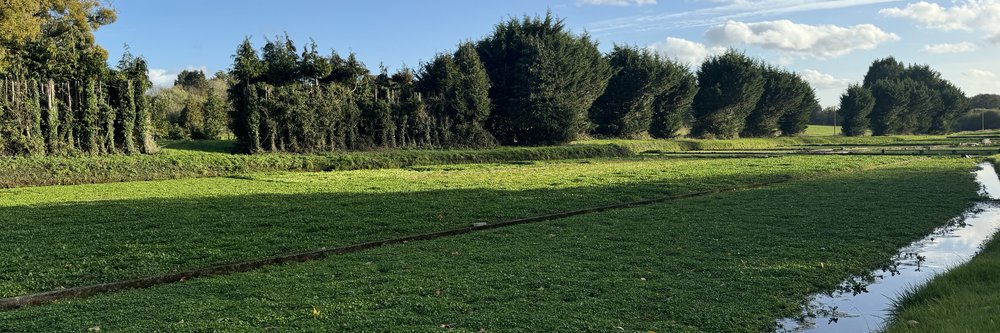
Watercress is considered a superfood, fit for a king – and the produce of one CLA member was indeed recently served to royalty, and the world’s leading dignitaries.
Family-run grower Sunbeam Watercress supplied the state banquet at Windsor Castle, laid on for the visit of US President Donald Trump in the autumn.
Watercress panna cotta, with parmesan shortbread and quails egg salad, was the starter, grown in the natural chalk springs of Hampshire.

It was a proud achievement for the Sunbeam team. Third generation farmer Graham Noble says: “We didn’t actually know our watercress had been used until the next day, as it was one of our London wholesalers who supplied them, so it was a nice surprise.
“It was great to be on the menu. Local produce is very important.”
Graham came into the business 20 years to work alongside his father, Rod, who was born on the farm and took over in the 1960s. It was Rod’s father Ivor who bought the traditional mixed farm in 1934, diversifying to include trout fishing, shooting and watercress to run alongside the arable, dairy and livestock.
Watercress is now the driving heart of the business, with Graham taking on the management in 2012 and expanding the growing operation. Along with another member of staff, he is assisted by teenage nephew Alex, who is currently learning the ropes.
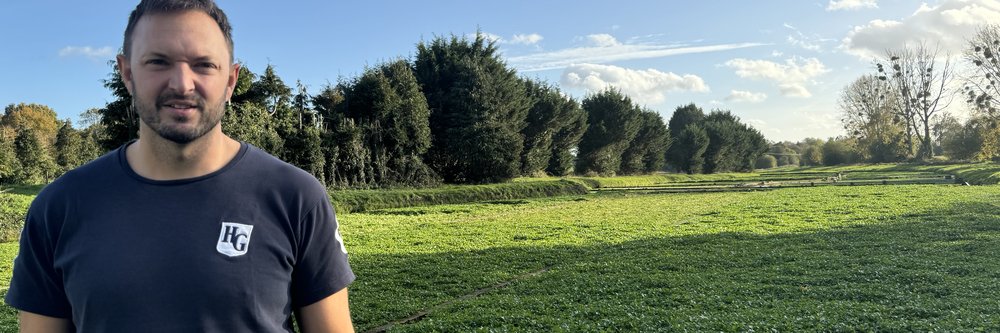
Scything and transplanting
The 70-acre farm near Romsey grows watercress all-year round. Since the 1990s many greengrocers have disappeared due to the rise of the supermarkets, so the business now focuses on supplying wholesalers, restaurants and hospitality venues across the south of England.
Traditional methods are still used, including scything and transplanting – a source of pride for Rod: “We still cut, bunch, wash and pack by hand. How many businesses can say that?
“Many have mechanised over the years, but we’re very traditional, and I hope it carries on in the future.”
The UK watercress industry is concentrated in the chalk streams of Hampshire, Dorset and Wiltshire, where mineral-rich groundwater provides ideal conditions for cultivation in beds.
While the number of smaller growers has fallen over the years, Hampshire and the surrounding counties still boast a number of thriving independent producers and traditional businesses.
Celebrating the peppery leaf
Over the last 15 years there has been more talk about healthy foods, and quite a lot of research and marketing has been undertaken to help it become known as a superfood.
Hampshire became the centre of the industry in the 1860s when the rail line to Alresford opened, enabling farmers to get their leaves to market in Covent Garden. The Watercress Line remains open as a popular heritage attraction today, while the annual Alresford Watercress Festival attracts thousands of visitors celebrating the peppery leaf.
Considered a superfood due to its high concentration of vitamins, minerals and antioxidants, watercress has been enjoying something of a boom in recent years. An aquatic plant related to mustard, broccoli and wasabi, its profile has been raised further by celebrity chefs and use in TV cookery shows.
Graham says: “Over the last 15 years there has been more talk about healthy foods, and quite a lot of research and marketing has been undertaken to help it become known as a superfood.
“It’s very versatile, and can be used in soups, smoothies, pesto, salads, garnishes for steak, and there’s even cheese and watercress scones.”
Water highs and lows
While the product is popular, challenges remain, including rising costs and that age old problem – the weather.
Graham says: “In the last 12 months we’ve seen the lowest water level in 20 years, after the dry summer, but also incredibly high levels after the previous wet winter.
“Such extremities are hard to work with, and it’s only going to continue.”
With 95% of the farm’s income coming from watercress, Graham is looking to diversify, with plans to open three offices on-site as well as considering tourism and glamping options.
He adds: “We have four acres of watercress, and the business has doubled in size over my time here, providing the vast majority of our income.
“We need something to run alongside the main business, sympathetically. Though on a sunny day, you can’t beat the sight of watercress growing in the beds.”