Land Use Framework published - what it means for members
The government’s long-awaited Land Use Framework was published (Wednesday 18 March) by Environment Secretary Emma Reynolds, and sets out how England uses its land.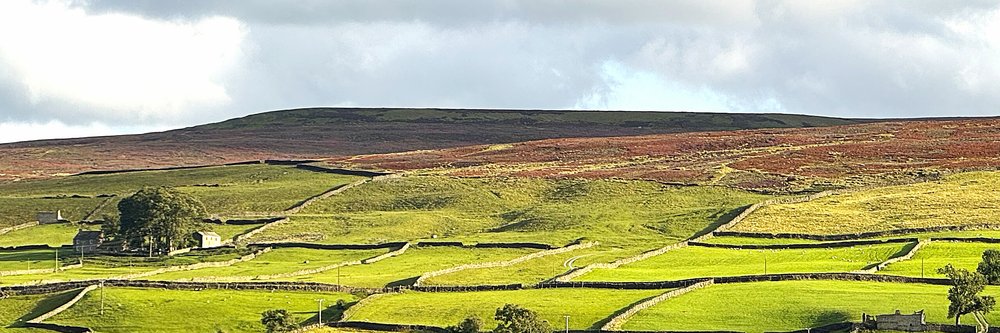
Land Use Framework finally published
Defra published the Land Use Framework for England on Wednesday 18 March. It has been a long time in the making, following a Defra commitment in the Food Strategy 2022. The CLA responded to an extensive consultation in 2025, and now finally, it is published.
So is it worth the wait? And what does it mean for landowners and managers?
The Land Use Framework is intended to help the country balance increasing pressures on limited land for farming, housing, energy, nature recovery and climate obligations. The Land Use Framework will not have immediate or direct relevance to individual businesses on its own, but it will increasingly be built into national and local strategies, plans, and policies that will affect landowners and managers. This could be in relation to spatial plans for siting housing and energy projects and infrastructure, or, through the Local Nature Recovery Strategies that identify opportunity areas for nature recovery. It will also feed through the evolution of the Environmental Land Management schemes and funding for woodland creation, for example to support targeting funding for best value for money.
The Land Use Framework covers three areas:
- A long-term vision for 2030 and 2050.
- Provides 4 principles to inform decisions relating to land use – multifunctionality; right use, right place; future-ready decisions; and, adaptive by design.
- Government actions to support land use change including better data and tools to support decision making, as well as incentives and other actions to remove barriers.
Land Use Framework vision(s)
While visions can seem a bit vague, they are essential to enable the right government policies and incentives to make them happen. The Land Use Framework has a short-term vision for 2030 and a longer-term vision for 2050.
It is really a collection of visions from different perspectives covering housing, energy infrastructure and clean power, food production, nature recovery (including forestry and woodland), resilient landscapes (large scale change), landscapes for water (regional and catchment scale water planning), and communities (more local involvement).
Each is based on various commitments and government targets and some aspiration, as well as responses to the consultation, so don’t hold any surprises, other than perhaps, the absence of a forestry vision? They are expected to be updated over time and adapt to circumstances.
The Framework principles
The Framework principles, while aimed primarily at national and local government policy making where there is an impact on land use, can also be useful to land-based businesses. For example, having access to national and local spatial plans for housing and infrastructure, understanding the long-term picture of the impacts of climate on your land, and opportunities for nature recovery or flood alleviation could inform business plans and investment strategies. When doing this sort of business planning, it would make sense to consider the Land Use Framework principles in that process.
- Multifunctionality: land use should be planned and managed to deliver greater benefits across a range of outcomes e.g can you combine farming with nature outcomes?
- Right use, right place: land should be used in ways that align with the local context e.g. this could mean local development plans or Local Nature Recovery Strategies.
- Future-ready decisions: land use decisions should take a long-term view, using best available evidence e.g. on climate change impacts
- Adaptive design: Land use policy and delivery should be flexible to evolve and respond to changes. e.g. building in future flexibility.
How will the Land Use Framework impact landowners and managers?
Prescriptive vs informing
The Land Use Framework itself is not intended to prescribe specific land uses in specific place, but to inform decisions. However, the development of strategic plans for housing and energy infrastructure inevitably means that there will continue to be unwelcome changes in some areas. The CLA has made the case to protect the autonomy of the landowner and manager to make the decisions, that are right for their land and business, particularly around nature recovery and other environmental actions.
Separation from planning
The Land Use Framework is separate from the planning process and it is intended to ‘inform decision-making on land use, without itself forming part of planning policy or individual planning decisions.’ This is something that the CLA has championed during the consultation phases. However, it does not change the planning policy requirement to have regard to Local Nature Recovery Strategies, and to direct development away from Best and Most Versatile (BMV) land, so there is likely to be some impact at a local level, depending on priorities.
Food production
In relation to food production, the government has stated their commitment to maintaining overall food production in the long term. At this stage, this feels like a bold (if slightly undefined) commitment, given the analysis that shows 18% of agricultural land will need to come out of production by 2050.
This land use change is made up of 6% into housing and renewable energy, 5% in marginal land within the farming system such as buffer strips, and the remainder as land use change for woodland and peatland restoration. Of course this is over 25 years, and it is likely the most marginal land that will be affected, but some skepticism remains. The mirror view is that 82% will remain in farming, and more if multifunctionality is achieved.
It is expected that maintaining food production will be met by productivity gains. Importantly, the changes will be supported by a range of government actions, some already in train, such as the sector growth plans, Farming and Food Partnership Board and the Farmer Collaboration Fund.
Additional actions on farm advice and evolution of the Environmental Land Management (ELM) schemes, including increased targeting of actions, will be set out in the Farming Roadmap, due to be published in the summer. Their data analysis for the future underlines the need to ‘strategically conserve agricultural land with the greatest long-term potential for food production’. To support this there will be reporting of changes in agricultural land in the annual Food Security report (as well as the levels of food imports and ‘imported hectares’ to assess dependency on food imports), which will enable adaptation of policies if circumstances change.
Private funding opportunities
There is also an intention to support more private funding opportunities alongside public funding, with a range of actions including a requirement to publish data on nature and carbon market projects so that there is greater transparency of local supply, and to encourage more joined up actions, and the establishment of Nature Positive Pathways for the agri-food system in 2026.
Land Use Framework data and analysis?
A primary purpose of the Land Use Framework is the provision of more robust and consistent data and analysis to aid decision making. There are plans for greater access to more data across national government and local government to improve policy development, but data will also support project developers and landowners and managers.
The government is setting up a Land Use Unit that will make Defra data and analysis more visible and accessible. They will initially focus on mapping Defra outcomes (food, nature, water etc) and on long term assessment of climate change impacts on land use. These will combine with other spatial plans on housing and infrastructure to improve coordination and aid decision-making.
There are a number of other spatial mapping intentions to streamline existing material and create new layers, with improved access including:
- Publish national maps of spatial strategies and plans for growth, housing, food, environment and climate change.
- Publish a Predictive Agricultural Land Classification (ALC) map in spring 2026, to replace the outdated Provisional ALC map, followed by a technical review of the ALC system by 2028
- Publish all survey condition data that the Natural Capital and Ecosystem Assessment (NCEA) programme by 2029 to support long term investment decisions.
- Modernise environmental datasets and more environmental data such as cultural heritage, climate change resilience and adaptation, air quality and light and noise pollution.
- Consider improved data on public rights of way and local biodiversity data
- New research projects on how different habitats will be affected by climate change.
Access to data is going to be improved, through a ‘making land digital’ approach, and a better tool for farmers and land managers, with a programme of work to explore options. In addition, there is an intent to improve transparency and accuracy of land ownership data to reduce costs to enable more collaborative work.
Was it worth the wait?
Overall, yes. It is a step forward in improving consistency of data and clarity about how strategic land use decisions will be made and plans to develop this further. There is a clear sense of collaboration across government between departments, in particular Defra, MHCLG (planning) and DESNZ (energy and net zero).
However, it is just the start of the process, and we can expect changes over the coming years as data improves, processes embed and realities of land use decision-making sharpen. The CLA will remain alert to unintended consequences and will work with national and local government to ensure that it works well for land owners and managers and appropriate safeguards are in place in relation to data.
The CLA has the benefit of an integrated policy team that can quickly connect issues across planning, infrastructure, housing, energy, access, farming, forestry and the environment, and are connected into all government departments. We already have our watch list of issues, but do get in touch if you have any questions or areas of concern susan.twining@cla.org.uk
