Investing in a habitat bank: the Swinton Estate
Read our six top tips for investing in nature and find out about the Swinton Estate’s journey to transform 20 acres of land into North Yorkshire’s first habitat bank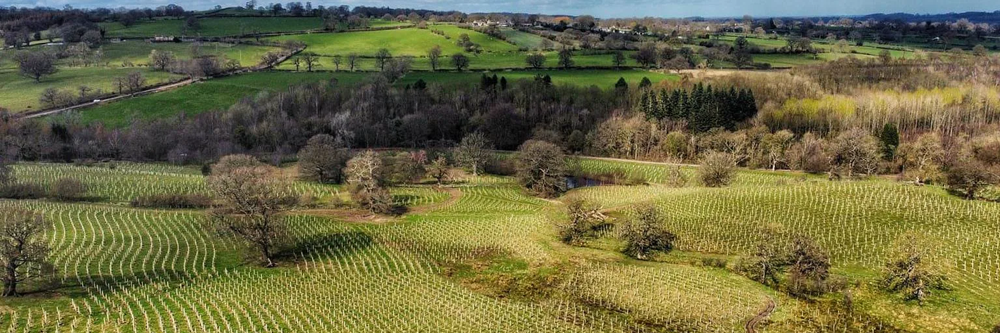
Swinton Estate is custodian of one of the largest privately owned natural landscapes in England. Set in the Nidderdale National Landscape, stretching from the River Ure in Wensleydale up to the Pennines, the 20,000-acre estate is a mix of ancient woodland, commercial forestry, Site of Special Scientific Interest moorland and hill farms.
The estate comprises Swinton Park, a heritage castle hotel, a cookery school, Swinton Bivouac tree lodge and glamping retreat, the Swinton Country Club and three restaurants. Earlier this year, it secured a section 106 agreement for offsite biodiversity credits, covering 20 acres of land – equating to 55 habitat units.
Biodiversity project
The estate has long been at the forefront of restoring biodiversity. In 2022, owner Mark Cunliffe-Lister and his team applied for Natural Environment Investment Readiness Fund funding to plant multifunctional woodland, to understand the potential of securing private financing into nature markets.
The important question, Mark says, was “how do you pay for multifunctional woodland and achieve various benefits such as sequestering carbon and enhancing biodiversity while also considering our productive tenant farmers?” The exercise provided good baseline data and the estate subsequently took part in a Landscape Recovery Test and Trial that focused on broader links between moorland, hedgerows, riparian areas and woodland.
Planning approval for statutory Biodiversity Net Gain was sought in late 2023 with the submission of habitat management plans in association with CSX Carbon. The estate opted to work with the council under section 106 rather than taking the conservation covenant route.
Mark hosted ‘sustainability’ lunches to understand how companies wanted to invest in carbon schemes. These discussions led to the creation of ‘The Nourish Partnership’ - a platform whereby businesses can invest in a ‘carbon plus’ model that combines carbon sequestration with enhanced biodiversity and clean water.
Ongoing biodiversity work
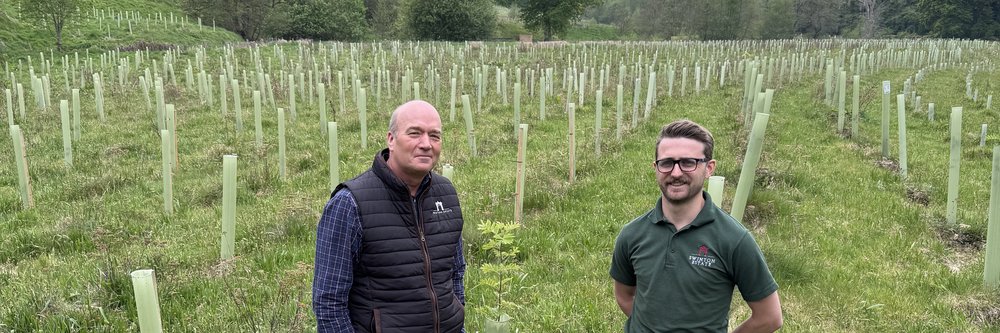
The estate looks to enhance biodiversity continuously, working with partners such as Nidderdale National Landscape to monitor progress. In 2023, work began to turn overgrazed land into a more biodiverse habitat through tree planting and improvements to grassland and hedgerows and meadows; the aim is to encourage more birds, butterflies and insect life, and improve the variety of moss, fungi and wildflowers.
Swinton is also actively involved in the Hen Harrier Recovery Plan and Curlew Recovery Partnership, which involves tenant farmers and gamekeepers work together. Regular wildlife surveys are carried out, including the Game and Wildlife Conservation Trust’s (GWCT) Big Farmland Bird Count and the Bee Conservation Trust’s monthly bee survey.
In addition, the estate tackles invasive species and is working with the Yorkshire Dales Rivers Trust on a Himalayan balsam programme.
How it works
Swinton Estate has units registered and ready to purchase, amounting to an agreement to deliver enhanced biodiversity at scale. This is then locked in with an obligation to monitor and manage it for 30 years.
“The contract for selling BNG units is between us and the developer or corporate,” Mark says. “The commitment is either between you and the council (under section 106) or between you and the body responsible for the conservation covenant.”
Each unit is worth around £25,000, but the value varies according to the type of habitat, such as grassland, mosaic (brownfield site), river or hedgerow. The habitat’s value is dependent on its scarcity – for instance, mosaic landscapes are rarer, so are more expensive at £30,000.
Advice for members
- Conduct a baseline assessment via a carbon audit by using the Farm Carbon Calculator or similar.
- Identify the actions required to reduce the carbon footprint on your land.
- Once carbon neutral, look at your surplus and decide what you want to do with the excess.
- Chasing the market is a long-term process – it happens over years, not months.
- Join groups with similar goals and join forces with enablers such as Environmental Partners and the GWCT.
- Ensure you do not over-accept grant funding and then fail the additionality criteria test if you also want to sell carbon credits.
Looking ahead
At the time of writing, the Swinton Estate is undergoing the Wildlife Farms and Estates accreditation process, which recognises holistic and sustainable environmental, economic and social land management practices. The Nourish Partnership currently has 10 partners, with an ambition to have 50 in five years. The estate has sold voluntary carbon credits to three companies, two of which are its suppliers.
“What I have yet to do is to bring tenant farmers on stream,” says Mark. “They will also have a carbon footprint and there might be opportunities for them to do more tree planting and regenerative farming. In addition, we are also trying to understand the emerging importance of soil carbon.
“We will continue to work with the local planning authority to secure more environmental sites, including specialised open mosaic habitat units by the end of the year.”
We are not a rewilding estate; we are an active estate, seeking to balance food production and providing ecosystem services
Value of membership
Mark says of his CLA membership: “By talking to other members at events, you gather a more holistic understanding by listening and learning from their experiences on both a technical and practical level. Fellow members can help you find solutions to your own challenges.
“For instance, I discovered more about the Wildlife Farms and Estates accreditation through the CLA. This helped us understand where we are at through benchmarking and what we need to do to further develop nature markets.
“Additionally, the CLA’s tireless and continuous lobbying is to be lauded, especially given the current political climate,” he adds.