From farmland to safari – building a wildlife haven in Norfolk
We speak to CLA member Ed Pope about how he balances arable farming with a unique diversification focused on conservation and sustainability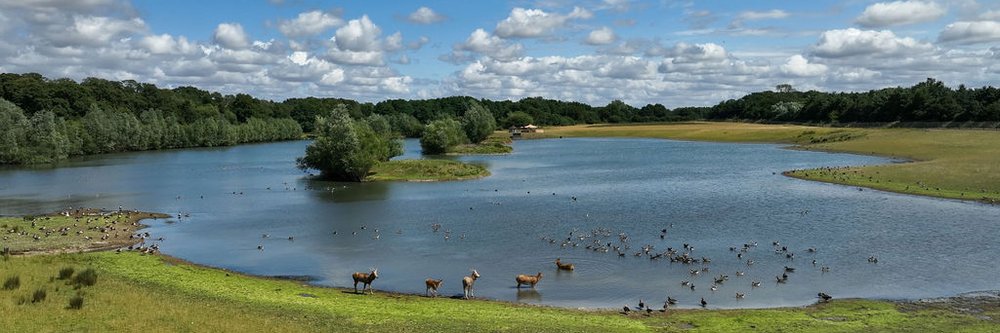
CLA member Ed Pope has taken inspiration from trips to Africa to create a unique wildlife safari, recognised for its commitment to conservation and sustainability.
Watatunga Wildlife Reserve, west Norfolk, covers 170 acres of woodland, grassland, wetland and lakes. Ed inherited his father’s fascination with Africa from a young age, with a particular interest in its many antelope and gazelle species.
Harnessing this passion, he transformed land on his home farm into the reserve, which has conservation at its heart. “Previously there were open fields with monoculture agriculture and underneath a very thin layer of topsoil there was sand and gravel,” he explains. “We skimmed the top soil off, extracted the sand and gravel and landscaped what was left into lakes, meadows, small fields and woodland. We’ve now created a wildlife reserve for endangered deer and antelope, along with birds from all over the world.”
Creating the reserve was a long-held ambition: “I grew up on the farm and I could see an opportunity with what we’d created from the sand and gravel extraction to build something that was really unique and we could develop a very special environment for conservation.”
A journey to conservation
With a background in agriculture, a seven-year stint in London and a busy farm to run, Ed’s route into conservation has not been conventional. Recent trips to Africa with his sister Annabel, a renowned wildlife artist, made him increasingly aware of the pressure that habitat loss and hunting were exerting on many of the species he had grown to love.
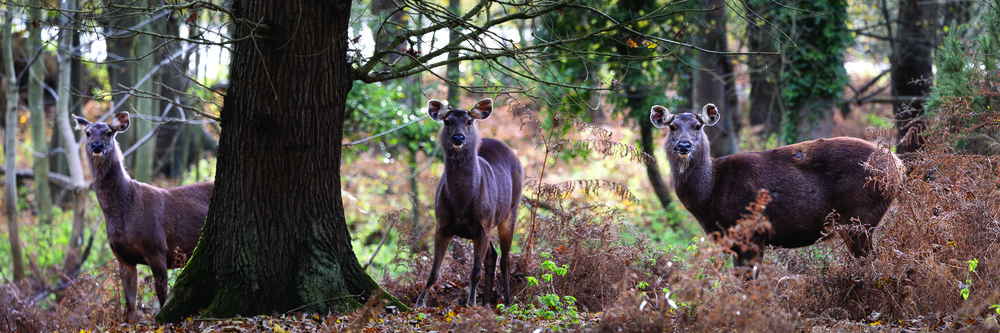
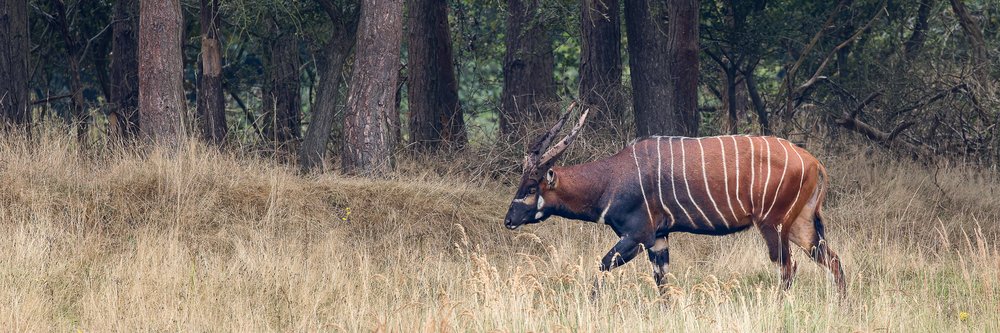
Watatunga has more than 24 ungulate species, which are free to roam across it. They include the Eastern Mountain Bongo, an African breed of antelope with less than 100 living in the wild.
Striking a balance in terms of the collection of animals at the reserve has been a key consideration. “We look at each individual species and assess what damage they may do to the environment,” he explains. “But by putting animals in together they complement each other; you get browsers, you get graziers and the bird life in particular will scratch through the dung and eat the parasites.”
The whole ecosystem works very well by having a mixture of animals interacting with each other, rather than segregated areas for the individual species.
The land is carefully managed to ensure the environment comes as close as possible to what the animals would encounter in the wild. “When you’re talking about some of the exotic species that don’t ordinarily live in the UK, we’ve planted very poor grasses in parts of the reserve for a reason,” Ed says.
“This replicates what they would have in their native countries and strengthens their gut development. We don’t worm the animals or give them antibiotics if we can possibly avoid it and they become stronger and fitter as a result.”
What is an Eastern Mountain Bongo?
The reserve experience
The reserve opened in 2020, with Ed and his team having to navigate changing national Covid-19 restrictions. However, the wide expanse of the reserve, and the fact that visitors are predominantly outside, meant that the pandemic had less of an impact than it did for other businesses.
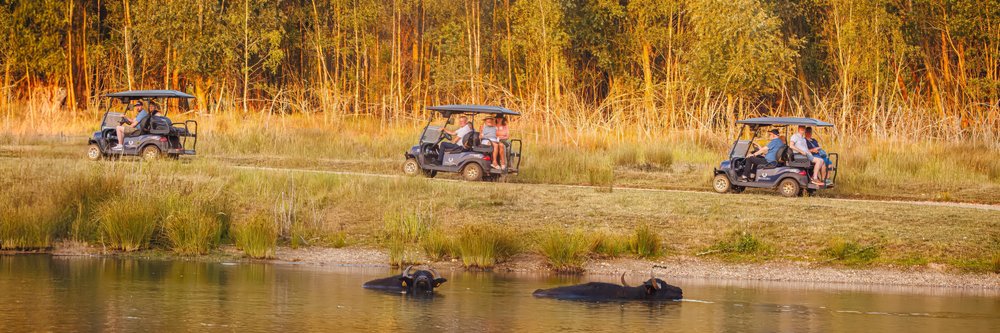
Visitors tour the reserve in self-driven buggies, accompanied by an expert guide to enhance their experience of seeing the animals and their understanding of the species they encounter.
Before the site opened to the public, Ed’s priority was ensuring that all the animals were comfortable in their new environment. “The reserve was created for the birds and the animals,” says Ed. “It was only once they’d settled that I began to introduce visitors. It is important that visitors know they are entering the animals’ world.”
To complement the visitor experience, guests can book a short break at the reserve, staying in on-site cottages. Those who do so have the opportunity to use a buggy and explore the reserve at their leisure during their stay.
“It’s been fascinating to be part of how we have brought everything together,” says Ed. “Visitors have been wonderful and the feedback from them has been incredible.”
Managing the farm
Alongside his enthusiasm for conservation, Ed focuses on sustainability across the wider farming estate. He is also passionate about inspiring the next generation, and school groups regularly visit the reserve and participate in educational activities.
There are also much-coveted student placement opportunities and those seeking to undertake research projects at the site are often given support, which get booked up well in advance.
Ed has ambitious plans for the future: “Our aim is to send some of the animals back to their native countries; we’re potentially deemed to be the only place in Europe that could send an animal from captivity back into the wild and for it to survive.
“We’re now getting recognition from big organisations that may have once thought I was a maverick. They’re coming to me and saying what we’re doing here is wonderful and that they’d like to work with us.”