A wildly successful idea: building a national camping network
In our latest CLA member feature, Henk Gertseema learns how Northumberland entrepreneur established a successful national network of unique and secluded camping sites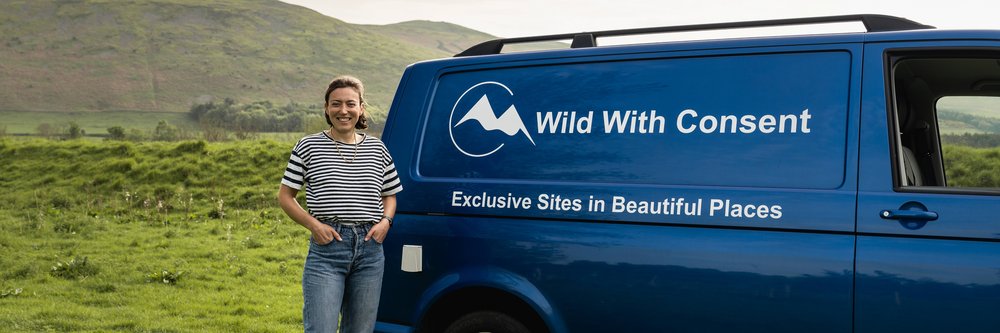
What began as a family discussion around that kitchen table at West Fleetham Farm in Northumberland has grown into Wild with Consent, a nationwide network of more than 200 carefully curated private camping sites connecting responsible campers with landowners looking to diversify.
Grace's career initially took her far from her early rural life. After travelling and studying economics at the University of Bristol, she worked in London, returning home to Northumberland while continuing to work remotely during Covid.
Idea into action
A keen campervan traveller, Grace spent many holidays exploring the UK in 'Tubs', the family's ancient and faithful campervan. During the first Covid summer, Grace realised she could find beautiful and exclusive places to stay by contacting farming friends, while other people wouldn't have that opportunity. As domestic staycations surged, it highlighted growing tensions between campers seeking freedom and landowners dealing with unmanaged access and fly-camping.
"We don't really like busy campsites with lots of other people," she explains. "It was hard to find quiet, aesthetically pleasing places to stay." Rather than seeing a problem, Grace saw an opportunity.
Wild With Consent launched in summer 2021 with just 12 camping host sites, most supplied by farming friends and contacts across Northumberland. Demand quickly exceeded expectations, and Grace gave up her London job to put all her energy into her business.
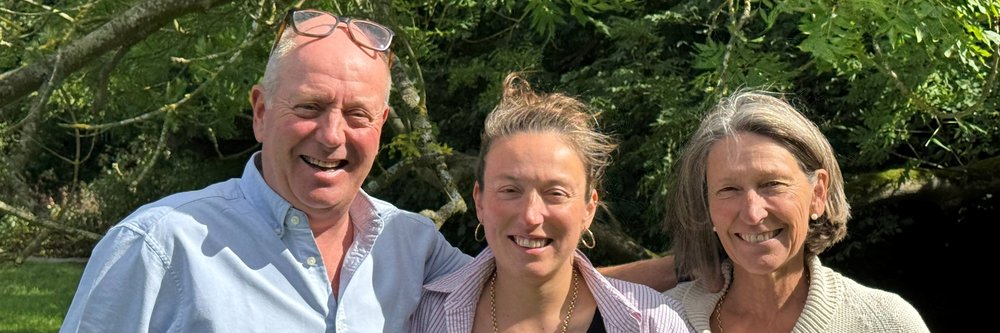
Family support was crucial. While Grace leads the business, her father, Hugh Fell, provides strategic guidance and business development support, while her mother, Fiona, acts as an adviser and sounding board. Indeed, Fiona is credited with creating the company's memorable name during early brainstorming sessions around the dinner table.
Grace is supported by Emily, initially taken on as an intern funded from Newcastle University and now fully employed as a core member of the team, looking after guest experiences and creative content.
Sites and booking platform
For many landowner hosts, the appeal extends beyond simply generating income. While smaller farms and smallholdings do welcome the additional revenue stream, larger estates are frequently motivated by a desire to share their landscapes, conservation work and farming practices with the public in a controlled, low-impact manner.
Unlike many online booking platforms, Wild With Consent is highly selective. Every potential site is assessed before joining the network, with Grace personally visiting almost every site. Privacy, seclusion and character are all essential.
Sites close to busy roads, affected by excessive noise, overlooked by neighbouring properties or visually dominated by man-made intrusive features are unlikely to be accepted. Essentially, sites should be ‘out of sight and out of earshot’.
As a membership organisation, the business holds exempt organisation status, allowing it to issue site certificates to approved sites. This allows hosts to use land for temporary camping while maintaining clear standards and oversight, without the need for planning permission.
“It was a bureaucratic process,” Grace admits. “But it helped us create robust procedures and think about things we might otherwise have overlooked.”
Visitors browse locations through an interactive website map, using filters to identify suitable sites based on vehicle type, facilities and campsite characteristics. The booking process is similar to Airbnb with the business taking a booking fee.
Wild With Consent manages reservations and payments, while hosts deal directly with site-specific queries. Hugh adds: “Grace did an amazing job designing the web-platform which is very user-friendly and intuitive.”
Central to the model is a strict code of conduct built around a simple principle: leave no trace. Ground fires are prohibited unless designated facilities are provided, waste must be removed responsibly, and campers are expected to respect both the land and neighbouring communities.
Guests and hosts can review each other after stays, creating accountability throughout the platform. While very few issues arise, anyone breaching the code of conduct faces removal from the network.
Organic growth
Five years after launch, Wild With Consent now offers more than 200 camping locations stretching from Sutherland in northern Scotland to Cornwall. Growth was largely organic through referrals, word of mouth and recommendations from existing hosts.
The numbers tell a remarkable story. The web-based platform now boasts more than 20,000 registered users and around 10,000 booked nights annually. Some of the most established sites now attract more than 100 bookings per year, while demand continues to outpace supply in many regions.
The growth is partly due to the changing expectations of modern campers. Many visitors actively seek digital detox experiences, with poor mobile phone reception often viewed as a benefit rather than a drawback. The appeal of Wild With Consent’s sites is in their simplicity, privacy and getting back to nature.
Future plans remain ambitious but measured. The immediate goal is to increase the network to 300 sites, with a longer-term ambition of reaching 500 locations. Expansion into the Republic of Ireland is also under consideration.
The challenge, according to Grace, is maintaining a careful balance between adding new sites and driving increased demand. “It’s about sustainable growth,” she says. “We don’t ever want to compromise on quality.”
CLA Membership
For both Grace and Hugh, CLA membership has played an important role in supporting the business.
Having been involved with the organisation for decades through his consultancy, Hugh joined as a member in 2015 when he set up as an independent rural consultant, and regards the CLA’s specialist advice as one of membership’s greatest strengths.
“It is my go-to place for professional advice,” he says. “Whether it’s planning, access, footpaths or land management, you get an excellent overview and guidance on what to do next. The ability to pick up the phone and speak to CLA experts represents exceptional value.”
Grace has also benefited from CLA events and publications such as Land & Business magazine.
“Particularly valuable have been the CLA's Next Generation and Women’s Network events, which provide opportunities to meet other entrepreneurs and rural business owners facing similar challenges. I have made some excellent connections”, she adds.