A guide to the budget
The 2025 budget will take place on 26 November. CLA Rural Business Economist Charles Trotman provides a history of the budget, why it is important and what members should look out for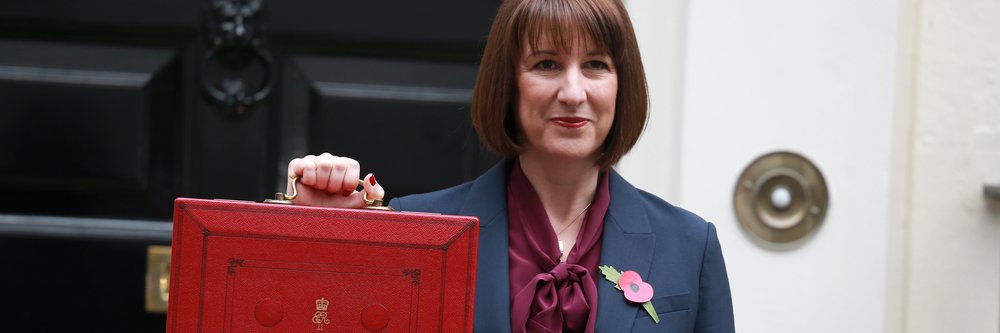
The government’s 2025 budget will be delivered by Chancellor Rachel Reeves on 26 November. We do not, however, know what will be in the budget speech, leading to much speculation in the media and many machinations about whether the announced changes will have a series of unintended and negative consequences.
This short guide provides a brief history of the budget, why it is important and what members should look out for - before the budget announcement as well as on budget day.
What is the budget?
The budget is the annual update on the state of the economy and the public finances. It is delivered by the Chancellor of the Exchequer, currently Rachel Reeves. The title "Chancellor of the Exchequer" goes back to the early 13th century in England, with the term "exchequer" referring to a medieval checking board used for financial calculations, symbolising the treasury or financial department. The Chancellor of the Exchequer was originally responsible for overseeing the royal revenues and presenting the budget to Parliament. The title has since evolved to represent the head of the UK Treasury and the UK’s chief economic minister.
When was the first budget?
The budget dates back to 1723, and Sir Robert Walpole, considered the first British prime minister, following the impact of financial losses as a result of the South Sea Bubble scandal.
Following Labour’s victory in the 1997 general election, then chancellor, Gordon Brown, introduced, what was in practical terms, a second annual budget, known as the “pre-budget report”, but now called the autumn statement.
Long or short
The longest budget was delivered by William Gladstone in April 1853, lasting four hours and 45 minutes. The shortest was by Benjamin Disraeli at only 45 minutes in 1867. Since the turn of the 21st century, budget statements have been around an hour long.
Why is the budget important?
The budget sets out the government’s fiscal policies for the next financial year, meaning the announcements of various fiscal decisions will impact everyone in the country. Last year’s budget was a good example of how one budgetary decision can significantly affect an economic sector, that being the intended changes to reduce agricultural property relief and business property relief from 100% to 50%.
So, budgets are incredibly important, and that is why many people are engaged months ahead of the budget statement, in trying to second-guess the mind of the chancellor.
Of course, it is not quite as straightforward as this; there is now a clear process of fiscal scrutiny and forecasting through the Office for Budgetary Responsibility (OBR). The OBR is responsible for setting a series of forecasts on the state of the UK economy, including growth forecasts over the short and medium term, the economic impact of current government policy and assessing actual performance against targets.
The importance of the OBR cannot be under-estimated: the failure of Liz Truss’ government to request the OBR’s assistance during the September 2022 mini budget led to market turmoil as the government’s fiscal statement had not been costed by the OBR. In its wake, both the chancellor and the prime minister resigned.
What can we expect from the 2025 budget?
We know that this year’s budget will take place on 26 November, and inevitably, there are many rumours circulating as to what the chancellor will say. This includes the imposition of some form of wealth tax, increases in capital gains tax and changes to stamp duty and council tax. However, it is important to stress that these are rumours only and we will only get a clearer idea about what the chancellor has in mind in the days leading up to the statement and on the day itself.
What is interesting is the actual date of the 2025 budget. Last year, the budget took place on 30 October, and this year, it will be nearly a month later. Of course, this could be the result of available space in the Parliamentary calendar.
It is clear that the chancellor has very little fiscal headroom. According to some commentators, the financial “black hole” that was estimated at £22bn last year has now increased to between £40 and £50bn. With the chancellor already making clear that the government will keep to its manifesto commitment to not increase income tax or national insurance, her room for manoeuvre is shrinking. If the government's objective is to try to fill this black hole, the question is not whether will there be tax increases, but will businesses once again be hit hard? Has the government fully understood the uncertainty caused by the fiscal decisions it made last year? Which economic sectors will bear the brunt of higher taxation?
Of course, we don’t know the answers to these questions now. But we do not have long to wait to find out.